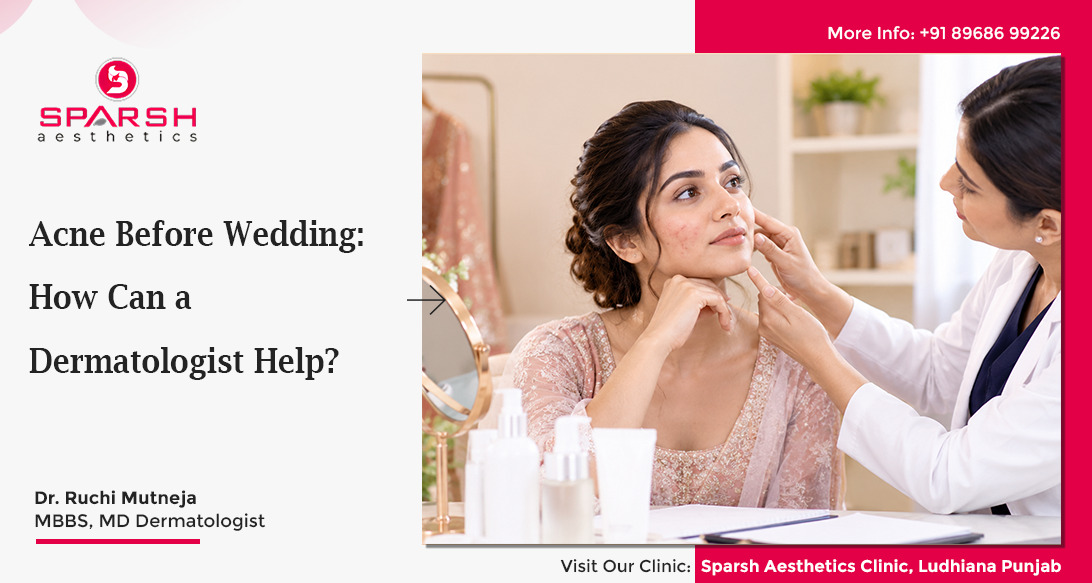

Your wedding day is an important occasion, and healthy, clear skin can make you feel more confident. However, good bridal skin preparation should not begin a few days before the wedding. Starting early gives your skin enough time to address concerns such as acne, pigmentation, acne scars, uneven skin tone, unwanted hair and dryness.
A dermatologist can assess your skin and recommend suitable pre-bridal skin treatment based on your concerns, skin type and wedding date.
When Should You Start Pre-Wedding Skin Preparation?
Ideally, begin your pre-wedding skin preparation around 3 to 6 months before your wedding. Some concerns, such as acne scars, pigmentation and unwanted hair, may require multiple treatment sessions.
Starting early also reduces the need for aggressive treatments close to the wedding.
6 Months Before the Wedding: Visit a Dermatologist
The first step in bridal skin preparation should be a professional skin consultation.
A dermatologist can examine your skin and identify concerns that may need treatment. This may include:
- Acne and frequent breakouts
- Pigmentation and dark spots
- Acne scars
- Uneven skin tone
- Unwanted facial hair
- Dry or sensitive skin
- Signs of sun damage
If you are looking for a dermatologist for brides in Ludhiana, a consultation at a professional skin clinic can help you plan treatments according to your wedding date.
4 to 6 Months Before: Treat Skin Concerns
This is the right time to work on concerns that need several weeks or months to improve.
Acne Treatment
If you experience regular breakouts, do not wait until the month of your wedding. A dermatologist can recommend suitable acne treatment depending on the severity and type of acne.
Avoid starting random creams or strong products without professional advice, especially if your skin is sensitive.
Pigmentation Treatment
Pigmentation can have several causes, including sun exposure, acne marks and certain skin conditions. Your dermatologist can determine the cause and recommend an appropriate treatment plan.
Daily sunscreen is also an important part of pre-wedding skin care, particularly when you are spending time outdoors.
Acne Scar Treatment
Acne scars usually need more time than active acne to improve. Depending on the type of scars, a dermatologist may discuss procedures such as chemical peels, microneedling or laser-based treatments.
The treatment should be planned well before the wedding rather than immediately before it.
3 Months Before: Consider Pre-Bridal Skin Treatments
Around three months before the wedding, your dermatologist can decide whether professional treatments are appropriate for your skin.
Depending on your concerns, options may include chemical peels, selected laser treatments or other skin procedures.
Not every treatment is suitable for every bride. The number of sessions, recovery time and expected results should be discussed before starting any pre-bridal treatment.
If you are considering a chemical peel, laser treatment or another procedure, allow enough time for your skin to recover before important wedding events.
2 Months Before: Maintain Your Skin
At this stage, consistency becomes more important than trying new products.
Follow the skincare routine recommended by your dermatologist and focus on:
- Gentle cleansing
- Regular moisturising
- Daily sunscreen
- Suitable acne or pigmentation products
- Avoiding unnecessary skin irritation
Good pre-bridal skin care is not about using many products. It is about using the right products consistently.
1 Month Before: Avoid Major Experiments
One month before the wedding is not the ideal time to suddenly try a new skincare range, strong exfoliant or unplanned cosmetic procedure.
If you already have a treatment plan, continue it according to your dermatologist’s advice. Any final procedures should be scheduled with enough recovery time.
1 Week Before the Wedding: Keep It Simple
During the final week, focus on keeping your skin calm.
Continue your regular skincare routine, protect your skin from excessive sun exposure and avoid picking acne or irritating the skin.
If you have a makeup trial planned, choose products that are suitable for your skin and remove makeup properly afterward.
What Are the Benefits of Starting Early?
Starting pre-wedding skin preparation early gives you more time to address skin concerns safely. It also allows your dermatologist to monitor your response to treatment and make changes when required.
Most importantly, you do not have to depend on last-minute treatments before your wedding.
Pre-Wedding Skin Preparation Timeline
| Time Before Wedding | Main Focus |
| 6 months | Skin consultation and assessment |
| 4 to 6 months | Acne, pigmentation and acne scars |
| 3 months | Professional skin treatments |
| 2 months | Skincare and sun protection |
| 1 month | Maintain your routine |
| 1 week | Keep skin calm and avoid experiments |
FAQs About Bridal Skin Preparation
How early should I start pre-wedding skin care?
Starting 3 to 6 months before your wedding is a practical approach, especially if you have acne, pigmentation, acne scars or unwanted hair.
What is the best pre-bridal skin treatment?
There is no single treatment that is best for every bride. Treatment should be selected according to your skin concerns, skin type and wedding timeline.
Can I get a chemical peel before my wedding?
Chemical peels may be suitable for some skin concerns, but they should be planned with a dermatologist. Allow enough time for recovery before your wedding.
Should I see a dermatologist before starting bridal treatments?
Yes. A dermatologist can assess your skin and help you choose suitable skin treatments before wedding events while avoiding unnecessary procedures.
Plan Your Bridal Skin Preparation in Ludhiana
Healthy wedding-day skin starts with proper planning. Instead of trying multiple treatments at the last minute, begin your pre-wedding skin preparation early and follow a plan suited to your skin.
At Sparsh Aesthetics, Ludhiana, Dr. Ruchi S. Mutneja provides dermatology and aesthetic consultations to help brides plan appropriate pre-bridal skin treatment based on their individual concerns.